


The LNG Talent Boom: Reshaping Energy Trading Recruitment
The global LNG market has entered a defining phase of growth, and talent demand is rising alongside it. What began just over a decade ago with the United States exporting its first cargo of liquefied natural gas has evolved into a structural shift in global energy markets. Today, the U.S. stands as the world’s largest…
The global LNG market has entered a defining phase of growth, and talent demand is rising alongside it. What began just over a decade ago with the United States exporting its first cargo of liquefied natural gas has evolved into a structural shift in global energy markets. Today, the U.S. stands as the world’s largest LNG exporter, reinforcing its role as a cornerstone of energy security and trade.
This transformation is not merely a story of infrastructure or geopolitics. It is a talent story. As investment accelerates across the LNG value chain, the competition for experienced professionals in trading, origination, risk, and commercial strategy is intensifying.
For hiring managers and executives, the implications are clear: the next phase of LNG growth will be defined as much by people as by projects.
A Decade of Growth Is Driving a New Talent Cycle
The scale and pace of LNG expansion are reshaping the global energy landscape. The United States has rapidly emerged as a dominant exporter, supported by abundant natural gas resources and significant investment in liquefaction and midstream infrastructure.
This momentum is expected to continue. Forecasts suggest that U.S. LNG export capacity could double by 2030, supported by new projects, expansions of existing terminals, and sustained global demand for flexible and secure energy supply.
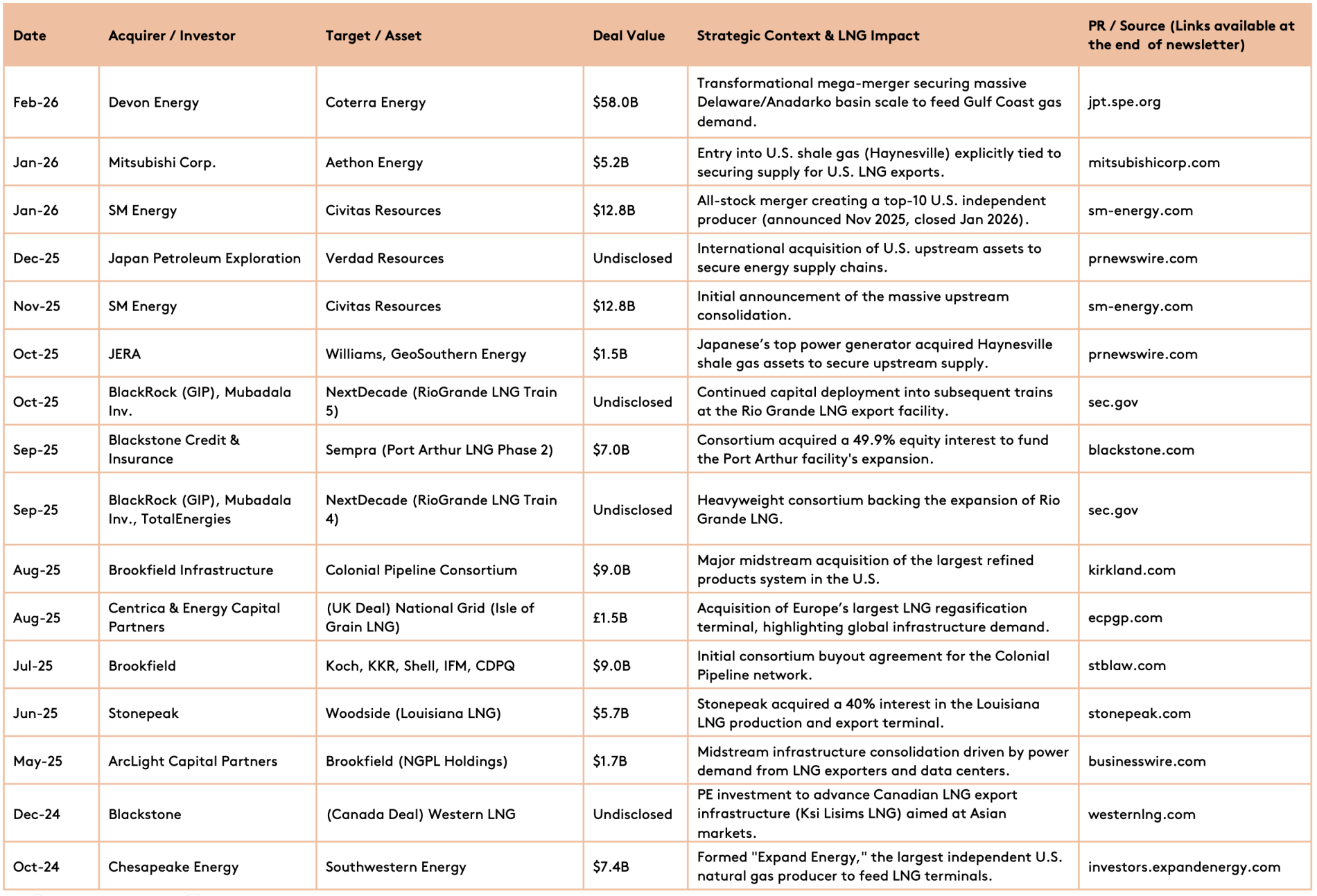
Such growth is fueling robust deal activity across the sector—from wellhead to tidewater—and creating a steady pipeline of opportunities for commercial and trading professionals.
As capital flows into LNG infrastructure, private equity firms, utilities, and international energy companies are taking strategic positions across the value chain. This influx of investment is not only shaping market dynamics but also increasing demand for experienced talent capable of navigating complex transactions and long-term commercial agreements.
Investment and M&A Are Reshaping the Hiring Landscape
The expansion of LNG capacity has triggered a corresponding surge in mergers, acquisitions, and equity investments. Private equity firms have taken minority stakes in export terminals, global energy companies have invested in U.S. production, and midstream operators continue to pursue expansion opportunities.
This environment is driving hiring demand in several key areas:
- Commercial and trading roles supporting global LNG flows
- Origination and structuring professionals securing long-term contracts
- Risk and analytics specialists managing price volatility and portfolio exposure
- Midstream and infrastructure experts enabling project execution
- Corporate development and investment professionals supporting strategic transactions
As capital is deployed across the sector, firms require individuals who can bridge commercial insight with technical understanding. The result is a talent market characterized by scarcity, competition, and rising expectations.
Structural Demand Is Expanding Beyond Traditional Markets
While LNG demand has historically been driven by power generation and energy security, new structural drivers are emerging. Among the most significant is the rapid expansion of data centers, which require reliable and scalable power sources.
As digital infrastructure grows, natural gas is increasingly viewed as a critical enabler of energy reliability. This dynamic is reinforcing the importance of long-term supply agreements and flexible trading strategies, further elevating the role of commercial and trading professionals.
At the same time, shifts in upstream production dynamics—such as potential plateaus in oil output and changes in associated gas supply—are reshaping sourcing strategies. These factors are encouraging greater investment in dry-gas fields and long-term contracts, creating additional complexity across the LNG value chain.
For talent, this translates into increased demand for expertise in market fundamentals, contract structuring, and cross-border energy trade.
The Modern LNG Professional: A Hybrid Skillset
As LNG markets mature, the expectations placed on professionals are evolving. Today’s leading candidates are defined by their ability to operate at the intersection of commercial strategy, finance, and risk management.
The most sought-after profiles typically combine:
- Deep understanding of global gas and LNG markets
- Experience negotiating long-term supply and offtake agreements
- Financial and contractual fluency
- Risk management and portfolio optimization expertise
- Cross-functional collaboration across trading, legal, and infrastructure teams
This hybrid skillset is difficult to replicate, contributing to a tight and highly competitive hiring environment. Firms are increasingly seeking individuals who can navigate complexity while delivering strategic value across the organization.
A More Competitive and Selective Talent Market
As LNG continues to expand, hiring decisions are becoming more deliberate. Senior professionals are taking a longer-term view of their careers, evaluating opportunities based on platform strength, strategic alignment, and the ability to generate sustainable performance.
At the same time, many of the strongest candidates are not actively seeking new roles. Instead, they are selectively engaging with opportunities that offer clear mandates, credible leadership, and long-term growth potential.
This dynamic reinforces the importance of targeted and well-articulated outreach. Firms that clearly communicate their vision and competitive advantages are best positioned to attract top-tier talent.
Strategic Implications for Hiring Managers
For executives and hiring leaders, the implications of LNG’s continued expansion are significant. Securing the right talent will be essential to capturing the opportunities created by increased investment and global demand.
Organizations that perform well in this environment typically:
- Align hiring strategies with long-term market growth
- Invest in building origination, trading, and risk capabilities
- Clearly communicate their commercial mandates and capital commitment
- Develop pipelines of mid-level talent to support future expansion
- Position themselves as credible and durable platforms for career growth
As LNG markets evolve, talent will remain a defining competitive advantage.
What This Means for Hiring
The continued growth of the LNG sector is reshaping the global energy talent landscape. Increased investment, expanding infrastructure, and rising demand for natural gas are driving a new cycle of recruitment across trading, origination, and commercial functions.
For firms seeking to compete effectively, attracting and retaining the right professionals will be critical.
If your organization is actively hiring in LNG or broader energy trading markets, it is worth considering how your platform is positioned and perceived. The most sought-after candidates are selective, and success in attracting them depends on clarity, credibility, and strategic alignment.
If helpful, we would be pleased to share insights on how your hiring strategy compares with current market trends, based on ongoing conversations across the global energy and commodity trading landscape.
Source Links
- https://jpt.spe.org/devon-energy-coterra-energy-agree-to-merge-in-58-billion-deal
- https://www.mitsubishicorp.com/jp/en/news/release/2026/20260116002.html
- https://www.sm-energy.com/investors/news-events/press-releases/detail/364/sm-energy-closes-merger-with-civitas-resources
- https://www.prnewswire.com/news-releases/verdad-resources-completes-sale-of-operated-oil-and-gas-portfolio-to-peoria-resources-llc-302699068.html
- https://www.sm-energy.com/investors/news-events/press-releases/detail/364/sm-energy-closes-merger-with-civitas-resources
- https://www.prnewswire.com/news-releases/jera-announces-close-of-haynesville-shale-gas-asset-in-louisiana-302686796.html
- https://www.sec.gov/Archives/edgar/data/1612720/000161272025000021/a20251016pressrelease.htm
- https://www.blackstone.com/news/press/blackstone-credit-insurance-leads-7-billion-investment-in-sempra-infrastructure-partners-port-arthur-lng-phase-2/
- https://www.sec.gov/Archives/edgar/data/1612720/000161272025000021/a20251016pressrelease.htm
- https://www.kirkland.com/news/press-release/2025/04/kirkland-advises-brookfield-infrastructure-on-acquisition-of-colonial-enterprises
- https://www.ecpgp.com/about/news-and-insights/press-releases/2025/ecp-and-centrica-announce-acquisition-of-grain-lng
- https://www.stblaw.com/about-us/news/view/2025/04/04/kkr-sells-stake-in-colonial-pipeline
- https://stonepeak.com/news/stonepeak-to-acquire-interest-in-woodsides-louisiana-lng
- https://www.businesswire.com/news/home/20250321607680/en/NGPL-PipeCo-LLC-Announces-Sale-of-Indirect-Interest-in-NGPL-Holdings-LLC
- https://www.westernlng.com/news/significant-investment-in-western-lng-funds-ksi-lisims-lng-and-prgt-projects-to-fid
- https://investors.expandenergy.com/news-releases/news-release-details/chesapeake-energy-corporation-and-southwestern-energy-combine/
For further discussion on this topic connect with our team today!